1870 to 1929
Eissa bin Abdulwahab, Kuwait's first nakhuda
Al-Hajji calls Eissa «Kuwait's first nakhuda and its great captain». Born in Kuwait in 1287 AH (1870), he first served as navigator for the well known Nakhuda Ahmed bin Naser, then commanded a baghla of the Al-Abduljaleel family before the First World War. Around 1912 he bought an Indian kotiya and sailed her to Bharuch, Khor Mian and Karachi. He also owned a boom called Al-Hassan, and commanded a ship for Al-Sadiq for several years before handing his own ship to his son Abdulwahab.
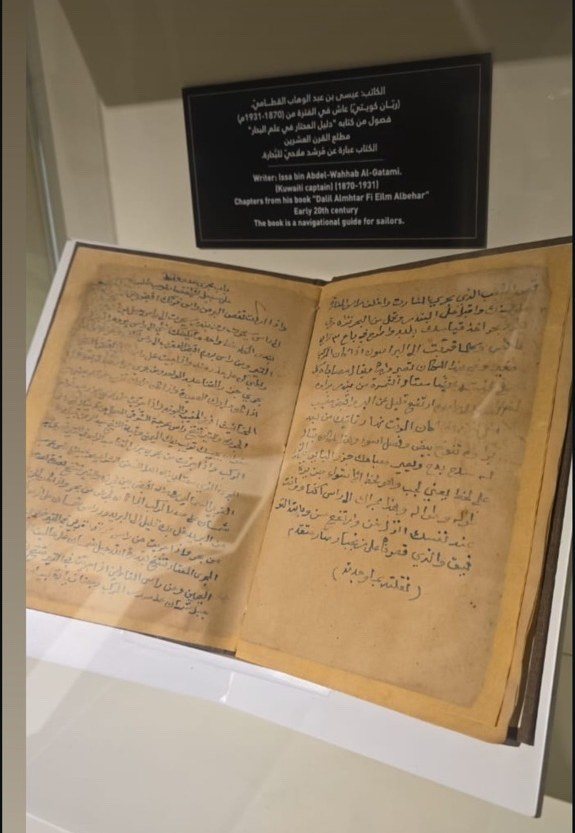
In 1334 AH (1916) he wrote Dalil Al-Muhtar fi 'Ilm Al-Bihar, a guide to the sea routes to India, Yemen and East Africa, with the latitudes and longitudes of the ports and how to use the kamal to fix a ship's position on the open sea. It was printed in Baghdad in 1342 AH (1924), and many Gulf nakhudas kept a copy in their sea chests. Alan Villiers later called it a work as useful as the ancient Periplus of the Erythraean Sea. Eissa also wrote Al-Mukhtasar Al-Khass lil-Musafir wal-Tawash wal-Ghawwas, a handbook for travellers, pearl merchants and divers, in 1343 AH (1925), a book on pearl weights, a study of Oman and the Jebel Akhdar, and a book of the dialects he heard on his voyages.
Sailing knowledge in those years passed by hand. The Landmarks of Old Kuwait Town records that in 1292 AH (1875) Nakhuda Shuaib bin Abdulsalam copied a navigation manual belonging to Ibrahim bin Mohammed bin Ghanim Al-Ghanim, Eissa's uncle and teacher. The writer Mohammed Mulla Hussein Al-Turkait said in a television interview that Shuaib's own manuscript guide later passed through other nakhudas' hands and that Eissa drew on it for his book, noting that in those days authors did not name their sources. That manuscript was lost when the ship carrying it sank.
He was remembered as «the navigator of Kuwait». Abdullah Khalid Al-Hatem, opening his history of early Kuwait, names «the giants of the sea, among them the skilled navigator Eissa Abdulwahab Al-Qatami, author of Dalil Al-Muhtar» as proof of how much learning the small town held. The 2006 English edition of Villiers' Sons of Sindbad calls his book «the Kuwait Periplus», and the Kuwait Government Press reprinted it in 1976.
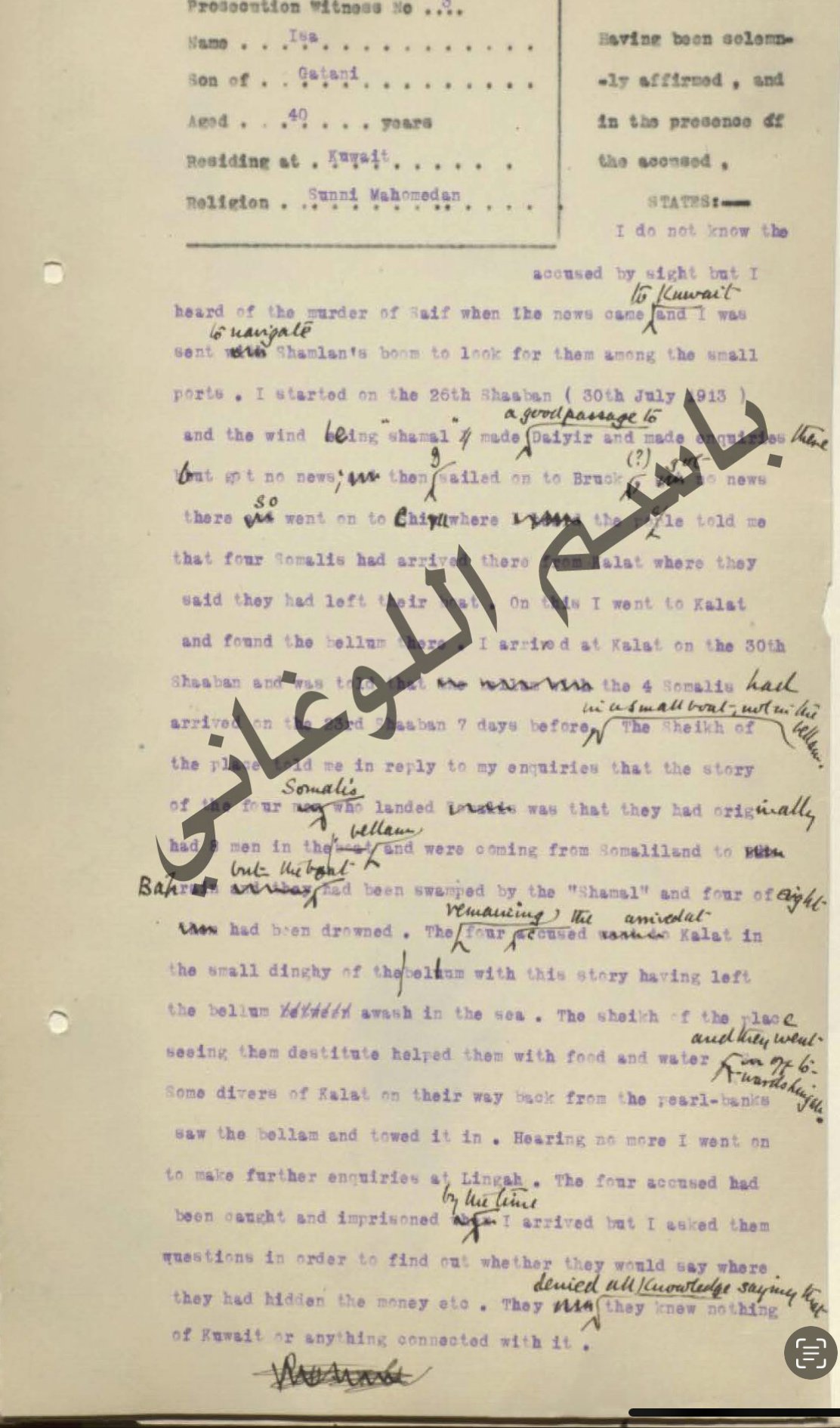
In 1913, after Somali sailors killed the pearl merchant Saif bin Ali bin Saif at sea and fled, Eissa took his son Abdulwahab and searched the ports of the Gulf until the men were caught at Lingah. His own witness statement in the case survives. He was also a poet of the mawwal, a friend of Sheikh Abdulaziz Al-Rasheed, and the close friend and protector of the blind poet Saqr bin Salem Al-Shabeeb. In 1346 AH (1927) he left Kuwait and settled in Muscat, where he died in 1348 AH and was buried beneath the mountains of Muscat, where his grave still stands. His nephew Abdulwahab bin Abdulaziz learned of his death on arriving in Muscat on Al-Badri.
Documents for this part
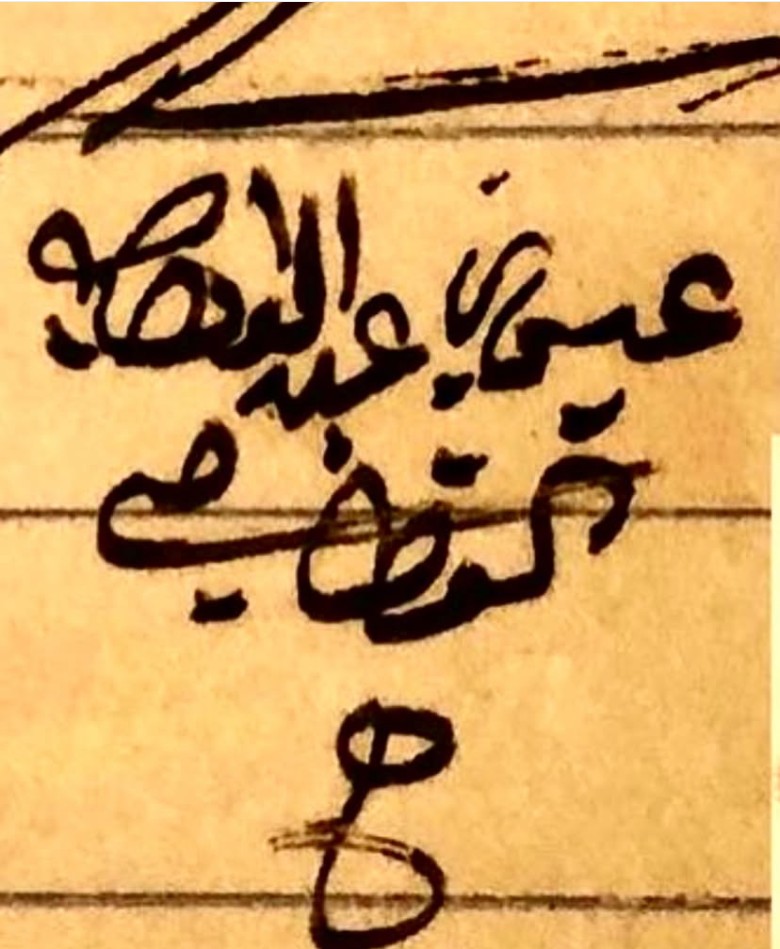
- Nakhuda Eissa Al-Qatami's signature on his 1902 letter to Bombay
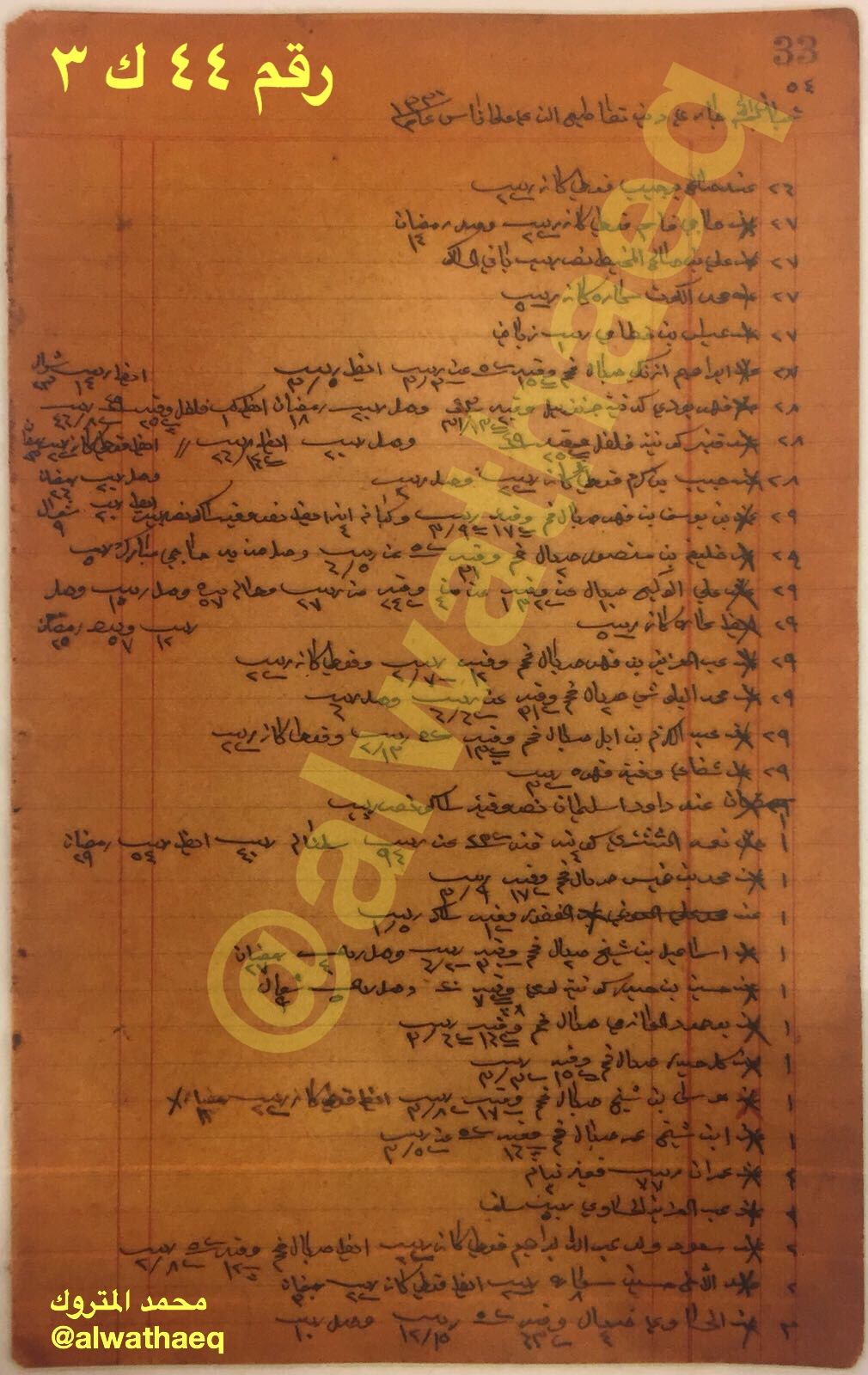
- Eissa bin Qatami, the navigator, in the Al-Matrook ledgers
- Nakhuda Eissa bin Qatami's witness statement in the Saif bin Saif murder case
- Eissa bin Abdulwahab buys a house in Fereej Ibn Khamis, and what became of it
Sources
- Al-Hajji, Nawakhdhat Al-Safar Al-Shira'i, pages 42 to 46
- Yousef Mohammed Saqr Al-Jasser Al-Ghanim, Al Zayed: Tarikh wa Rijal, 2006, pages 26 and 27
- Witness statement of Eissa bin Qatami, 1913, published by Bassam Al-Loughani in Al-Jarida, 2 November 2018
- Abdullah Khalid Al-Hatem, Min Huna Bada'at Al-Kuwait, introduction
- William Facey, Yacoub Al-Hijji and Grace Pundyk, introduction to Alan Villiers, Sons of Sindbad, Arabian Publishing, London, 2006
- Ma'alim Madinat Al-Kuwait Al-Qadima, part 7, page 43, footnote 19
- See also the Books page for Eissa's own books
- Ma'alim Madinat Al-Kuwait Al-Qadima, part 4, the section on Nakhuda Shuaib bin Abdulsalam, quoting Risalat Al-Kuwait no. 52 and Mohammed Mulla Hussein Al-Turkait on Pages from Kuwait's History